
AI in business: where to start and which use cases to prioritise
Reading invoices, answering customers, searching your documents: AI can lighten your teams' daily workload. Practical use cases, integration into your tools and precautions to take.
Haithem
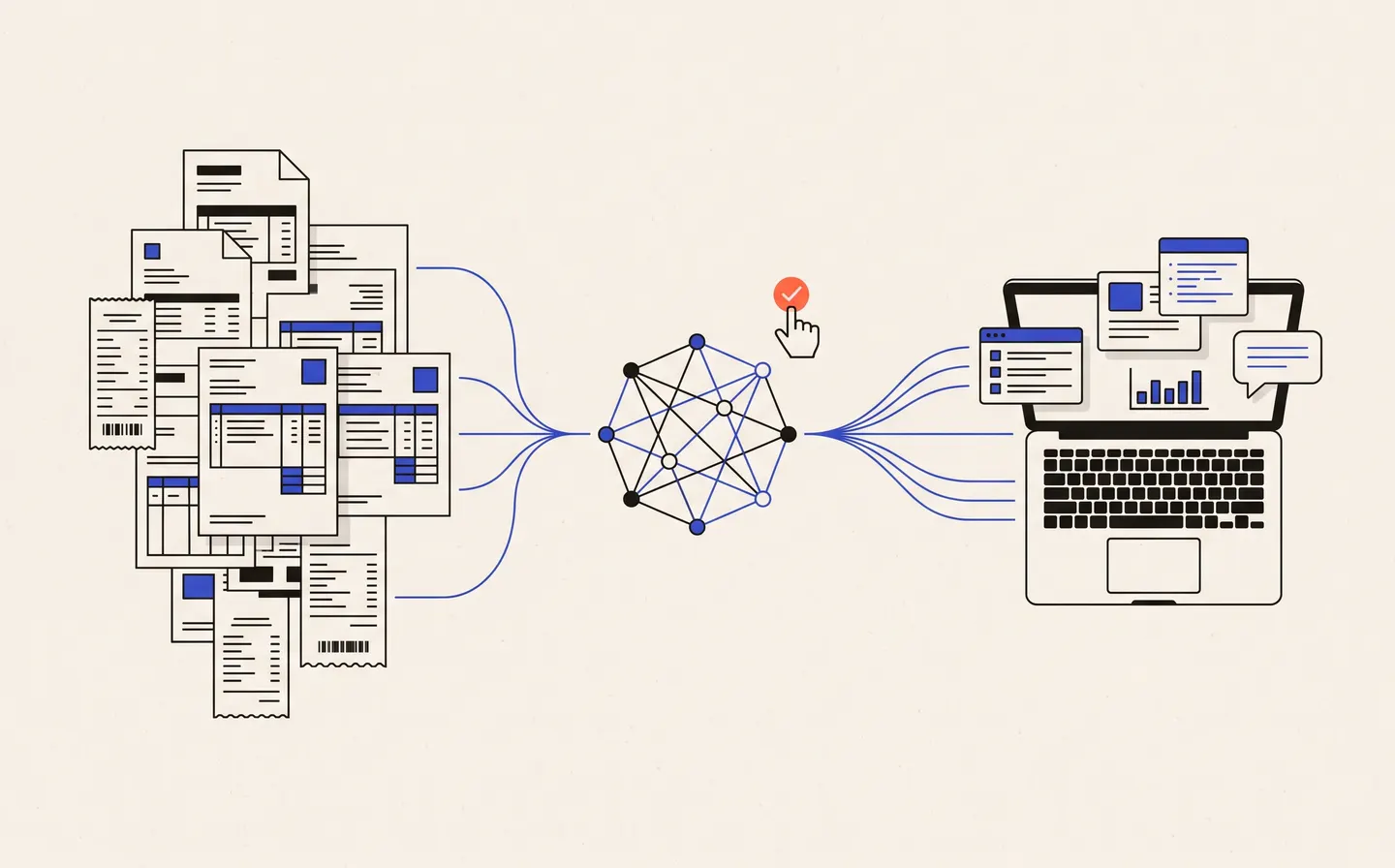
Artificial intelligence is no longer reserved for big tech companies. Reading an invoice, answering a customer question, sorting documents, summarising a report: repetitive tasks that take up your teams' time every day can now be partly handled by AI models built directly into your tools. The challenge is knowing where to start and what to realistically expect.
Start from a problem, not the technology
The most common trap is wanting to "do AI" without a clear goal. Projects that work start from a specific task: time-consuming, repetitive, low in added value, and where an occasional mistake can be caught. Ask yourself three questions: how much time does this task take each week? What data is needed to perform it? Who checks the result?
Practical use cases for SMEs
- Document extraction: automatically read invoices, purchase orders or ID documents, then pre-fill your ERP instead of re-typing everything.
- Customer assistant: answer frequent questions on your website or WhatsApp, in French, Arabic or English, and hand over to a person as soon as a request goes beyond its scope.
- Search across your documents: query your procedures, contracts or technical sheets in plain language rather than digging through folders.
- Assisted writing: draft product descriptions, standard replies or meeting notes, reviewed and approved by your teams.
- Analysis and forecasting: spot trends in your sales or inventory to anticipate stock-outs and orders.
Building AI into your existing tools
AI adds the most value when it fits into the tools your teams already use: your ERP, your SaaS platform, your online store or your mobile app. In practice, this means connecting to a language model through an API, preparing the data it needs, and designing an interface where users stay in control: the AI suggests, a person approves.
Precautions not to overlook
- Privacy: know where your data goes and what the model provider does with it. In Morocco, personal data processing is governed by Law 09-08.
- Reliability: an AI model can be confidently wrong. Important decisions should remain validated by a person.
- Costs: model usage is often billed per use; it should be estimated at the design stage.
- Measurement: define before launch the metric that will prove the gain (time saved, errors avoided, response time).
Start small, measure, scale
The best approach is a first, limited use case, put into production quickly and measured over a few weeks. If it delivers, you extend it; if not, you adjust without having committed an oversized budget.
Wondering whether AI could simplify a specific task in your company? Let's talk: the first meeting is free, and we'll tell you frankly whether AI is the right answer.