
Custom ERP or off-the-shelf software: how to make the right choice
Spreadsheets, separate tools, duplicate data entry: when it's time to adopt an ERP, should you buy a standard product or build a custom one? The criteria to decide.
Haithem
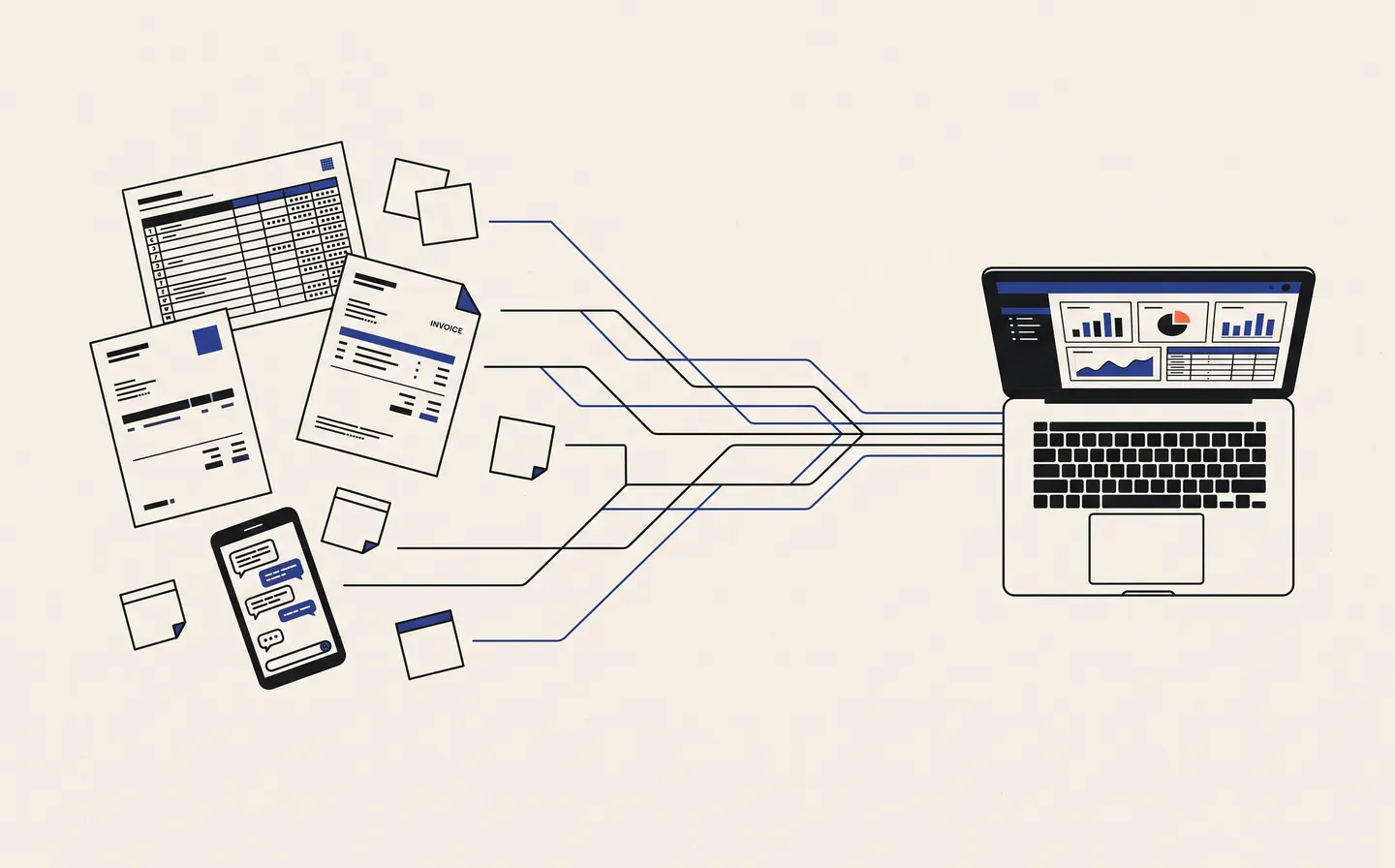
Inventory in one spreadsheet, invoices in another piece of software, orders jotted down on WhatsApp: many companies run on a patchwork of tools that don't talk to each other. Sooner or later, the question of an ERP comes up. The choice is then between an off-the-shelf product and custom-built business software.
What an ERP should really do for you
An ERP (Enterprise Resource Planning) system brings all company data together in a single tool: sales, purchasing, inventory, production, HR and invoicing. Its value is not in adding one more application, but in removing duplicate data entry, making figures reliable and giving everyone up-to-date information.
Before comparing solutions, list the tasks that waste your time today, the errors that keep coming back and the decisions you make without reliable data. That list, not a vendor's feature sheet, should guide your choice.
When off-the-shelf software is enough
A standard product is often the right call when:
- your processes are close to those of your industry, with no strong specifics;
- you need a tool quickly and are willing to adapt some habits;
- your business volume is modest and your needs change little.
The entry cost is usually lower, but per-user licences, paid modules and configuration add up over the years.
When custom software pays off
A custom ERP takes the lead as soon as the way you work is part of your value:
- specific approval workflows, complex pricing or documents unique to your trade;
- a need to connect your management system to an online store, a mobile app or existing tools;
- fast growth, with new sites, teams or business lines to bring on board.
The tool is built around your processes, not the other way round. You only pay for features you use, and the software grows with your business.
Questions to ask before you start
- Which processes come first? An ERP is rolled out module by module; starting with what weighs most reduces risk.
- Where is your data today? Spreadsheets, legacy software, paper: migrating existing data must be planned from day one.
- Who will use it, and on what device? Office, warehouse, field: usability and mobile access drive adoption.
- How will it be maintained? Hosting, backups, updates and improvements belong in the project, not as an afterthought.
Our approach
At Exisite, every ERP project starts with a free first meeting to understand your business and check that your expectations match your budget. We then write the specifications with you and build the tool step by step, on a test environment where your teams approve each module before it goes live.
Torn between an off-the-shelf product and custom development? Tell us about your project: we'll tell you honestly what fits your situation best.